

As a glass block supplier, I've witnessed firsthand the growing demand for energy - efficient building materials. Glass blocks, with their unique aesthetic and functional properties, have been a staple in architectural design for decades. However, in an era where energy conservation is paramount, making glass blocks more energy - efficient has become a crucial challenge and opportunity. In this blog, I'll share some strategies and insights on how we can enhance the energy efficiency of glass blocks.
Understanding the Basics of Energy Efficiency in Glass Blocks
Before delving into the solutions, it's essential to understand the factors that affect the energy efficiency of glass blocks. The primary energy - related properties of glass blocks include thermal conductivity, solar heat gain coefficient (SHGC), and visible transmittance.
Thermal conductivity, often denoted as U - value, measures how well a material conducts heat. A lower U - value indicates better insulation, meaning less heat is transferred through the glass block. The solar heat gain coefficient (SHGC) represents the fraction of solar radiation that enters a building through the glass. A lower SHGC is desirable in hot climates to reduce cooling loads, while a higher SHGC can be beneficial in cold climates to take advantage of solar heat gain. Visible transmittance refers to the amount of visible light that passes through the glass, which affects natural lighting and the need for artificial lighting.
Improving Insulation
One of the most effective ways to make glass blocks more energy - efficient is to improve their insulation properties. There are several methods to achieve this:
Vacuum Insulation
Vacuum insulation involves creating a vacuum between two or more layers of glass. Since there are no air molecules in a vacuum, heat transfer by conduction and convection is significantly reduced. Vacuum - insulated glass blocks can have extremely low U - values, making them excellent for energy - efficient buildings. However, the manufacturing process of vacuum - insulated glass blocks is complex and costly, which may limit their widespread use.
Gas - Filled Cavities
Another approach is to fill the cavities between glass layers with insulating gases such as argon, krypton, or xenon. These gases have lower thermal conductivity than air, which helps to reduce heat transfer. Argon is the most commonly used gas due to its relatively low cost and good insulation properties. By filling the cavities with argon gas, the U - value of glass blocks can be significantly improved.
Insulating Coatings
Applying insulating coatings to the surface of glass blocks can also enhance their energy efficiency. These coatings can reflect infrared radiation, which is a major component of heat transfer. Low - emissivity (low - e) coatings are particularly effective in reducing heat loss in cold climates and heat gain in hot climates. They work by reflecting long - wave infrared radiation back into the room, while allowing visible light to pass through.
Controlling Solar Heat Gain
In addition to improving insulation, controlling solar heat gain is crucial for energy - efficient glass blocks. Here are some strategies:
Tinted Glass
Tinted glass can absorb and reflect a portion of solar radiation, reducing the amount of heat that enters a building. Different tints can be used to achieve varying levels of solar heat gain control. For example, dark - tinted glass is more effective in blocking solar heat, but it also reduces visible transmittance, which may require more artificial lighting.
Reflective Coatings
Reflective coatings can be applied to the surface of glass blocks to reflect solar radiation. These coatings can be designed to reflect specific wavelengths of light, such as infrared and ultraviolet radiation, while allowing visible light to pass through. Reflective coatings can significantly reduce the solar heat gain coefficient (SHGC) of glass blocks, making them suitable for buildings in sunny climates.
Smart Glass Technologies
Smart glass technologies, such as electrochromic, thermochromic, and photochromic glass, offer dynamic control of solar heat gain. Electrochromic glass can change its tint in response to an electrical current, allowing users to adjust the amount of sunlight and heat entering a building. Thermochromic glass changes its tint based on temperature, while photochromic glass changes its tint in response to sunlight intensity. These smart glass technologies provide a more flexible and energy - efficient solution for controlling solar heat gain.
Enhancing Natural Lighting
While controlling heat transfer and solar heat gain is important, it's also essential to maximize natural lighting to reduce the need for artificial lighting. Glass blocks can be designed to enhance natural lighting in several ways:
Optimal Design and Placement
The design and placement of glass blocks can have a significant impact on natural lighting. For example, using larger glass blocks or arranging them in a pattern that allows for more light penetration can increase the amount of natural light entering a building. Additionally, placing glass blocks in areas where they can capture sunlight at different times of the day, such as on the south - facing facade, can optimize natural lighting.
Prismatic Glass Blocks
Prismatic glass blocks are designed to refract and distribute sunlight more evenly throughout a space. These blocks can be used to direct sunlight deeper into a building, reducing the need for artificial lighting in interior areas. Prismatic glass blocks are particularly useful in buildings with limited access to natural light, such as basements and interior rooms.
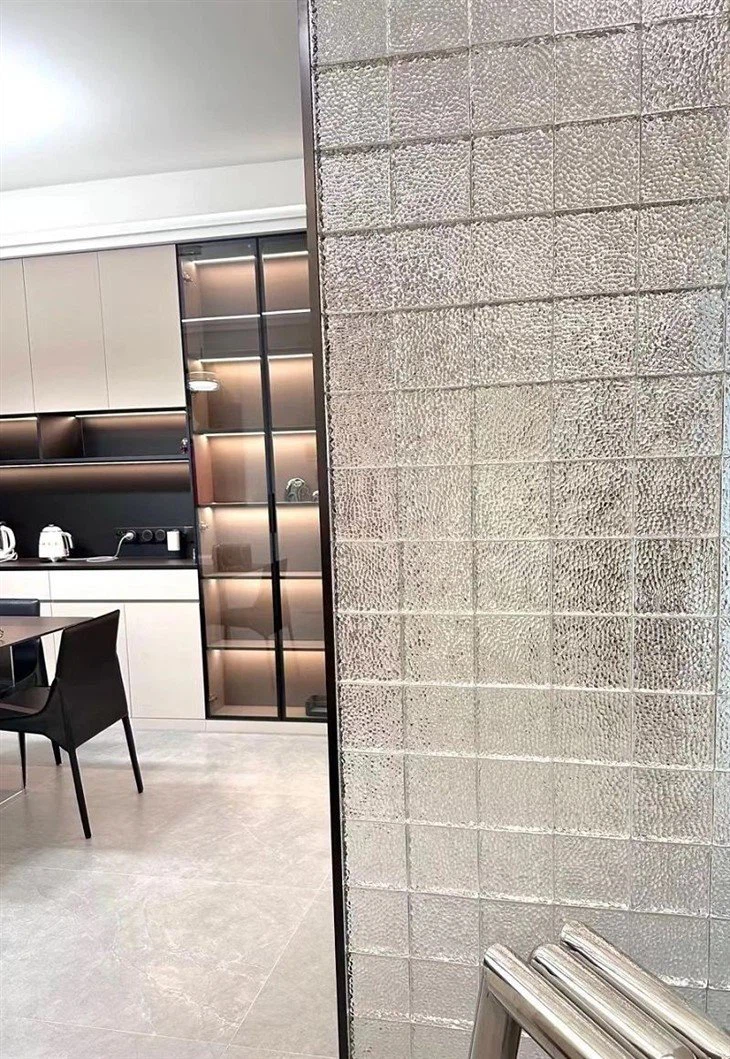

The Role of Glass Block Walls in Energy - Efficient Design
Glass Brick Wall can play a significant role in energy - efficient building design. They can be used as exterior walls, partitions, and even as part of a building's envelope. Glass block walls can provide insulation, control solar heat gain, and enhance natural lighting, all while adding a unique aesthetic appeal to a building.
When designing a glass block wall for energy efficiency, it's important to consider the orientation of the wall, the climate of the location, and the specific energy requirements of the building. For example, in a cold climate, a glass block wall with high - performance insulation and a relatively high solar heat gain coefficient may be desirable. In a hot climate, a wall with low solar heat gain and good ventilation may be more appropriate.
Conclusion
Making glass blocks more energy - efficient is a multi - faceted challenge that requires a combination of insulation improvement, solar heat gain control, and natural lighting enhancement. As a glass block supplier, I'm committed to providing innovative solutions that meet the growing demand for energy - efficient building materials. By implementing the strategies discussed in this blog, we can create glass blocks that not only enhance the aesthetic appeal of buildings but also contribute to a more sustainable and energy - efficient future.
If you're interested in learning more about our energy - efficient glass blocks or would like to discuss a potential project, I encourage you to reach out. We're here to help you find the best glass block solutions for your energy - efficient building needs.
References
- ASHRAE Handbook of Fundamentals. American Society of Heating, Refrigerating and Air - Conditioning Engineers.
- Glass Association of North America. Technical publications on glass properties and performance.
- International Energy Conservation Code (IECC). Building codes related to energy efficiency.